Aarhus is Denmark's second city, but don't let that phrase do any heavy lifting. It's a place you can cross on foot in twenty-five minutes, cathedral to harbor, cobblestones to concrete, and still find yourself somewhere genuinely strange by lunch. A Viking-era cathedral. A rooftop walk through a rainbow. A bus garage turned food hall. A pub wallpapered with 1,300 clown figurines. A forest where you can swim off a wooden pier and be back at your hotel before dinner.
This is the long-form answer to what to do in Aarhus, the attractions worth rearranging a day for, the food locals will actually queue for, the bars the students won't stop going to, and the streets where the city's real texture shows. Not a brochure. A field guide.
Aarhus has around 350,000 people, a harbor, a forest, and a university that keeps the place young. It is smaller than Copenhagen and about thirty percent cheaper. The Danes who live here will tell you without prompting that it's the friendlier version, the one where strangers actually make eye contact. Take that with as much salt as you like. Either way, there is more to do here than three days can cover, and the following is where we would send a friend.
Start With the Big Three
Aarhus has three attractions that earn their reputation, and skipping any of them to save time is a mistake.
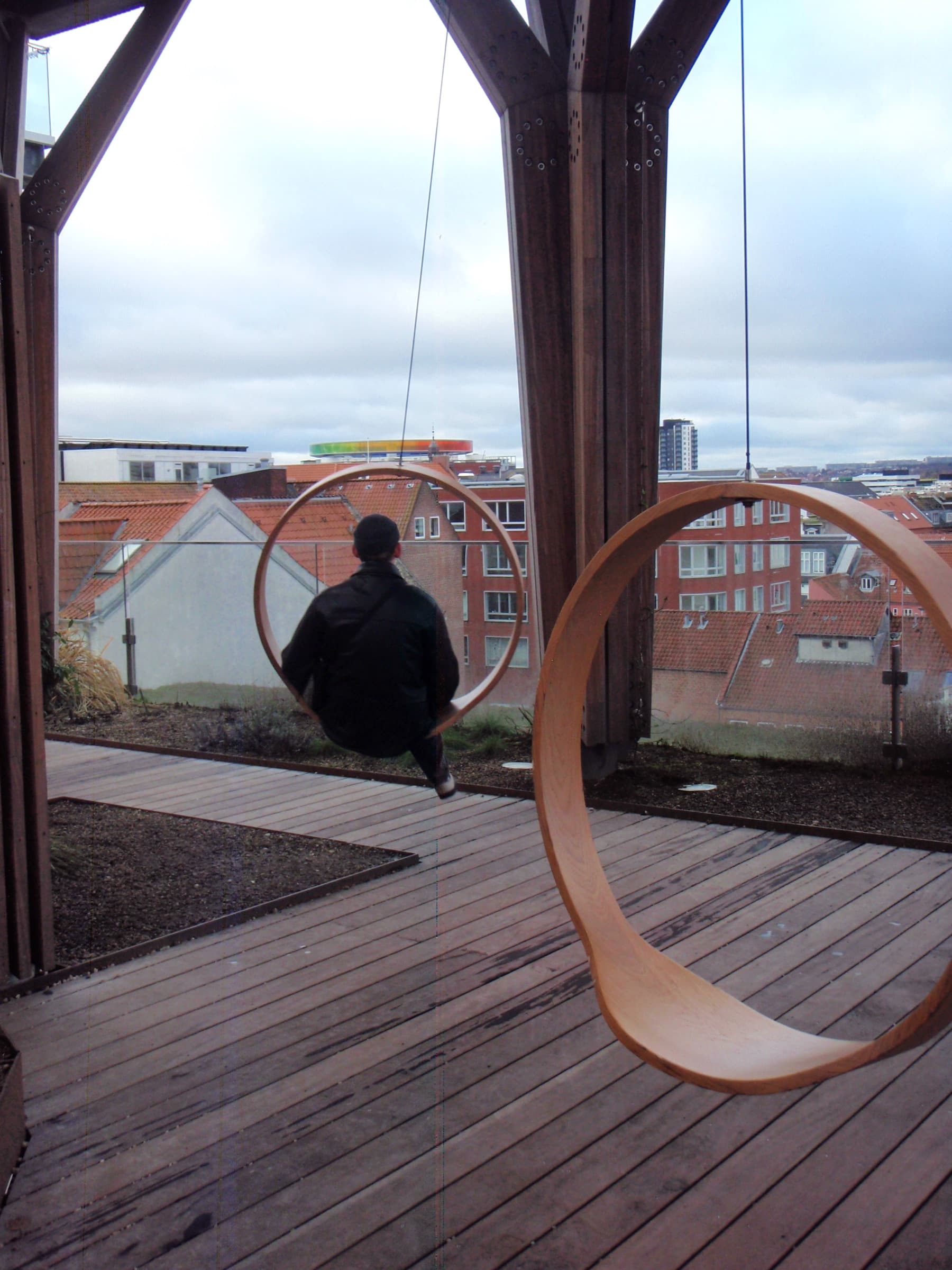
ARoS Aarhus Art Museum is the building with the rainbow on the roof, Olafur Eliasson's Your Rainbow Panorama, a 150-meter circular walkway of colored glass that turns the whole city into candy-colored weather depending on which pane you're standing behind. The art inside holds its own. A massive crouching figure by Ron Mueck makes grown adults go quiet. The basement installation, The Nine Spaces, is a meditation bunker disguised as an art piece. Give it three hours.
Den Gamle By (The Old Town) is the city's biggest attraction for a reason. This isn't a dusty museum behind glass; it's a living district of transplanted history, with actors in costume, shops selling real bread and real schnapps, and entire neighborhoods rebuilt for the 1860s, the 1920s, and the 1970s. The cobblestones will wreck your heels. The bakery smells of wood-fired ovens from 1864. Plan for half a day.
Moesgaard Museum sits ten kilometers south of the city in a building with a grass roof you can walk on. Inside, the Grauballe Man, a 2,300-year-old body pulled from a Danish bog, leather-dark and unnervingly intact, alongside one of Europe's best-staged Viking and prehistoric exhibits. Come for the archaeology, stay for the view from the roof over Marselisborg Forest.
If you only have one day in Aarhus and you want to leave understanding the place, do ARoS in the morning, lunch on the harbor, Den Gamle By in the afternoon. That is the canonical day, and it works.
The Waterfront You Can Actually Use
Aarhus rebuilt its harbor district in the last decade and handed most of it back to the public, which is why half the city ends up there on any sunny afternoon.
Dokk1 is the Scandinavia-sized public library at the harbor's edge, all glass, concrete, and enough free seating to survive a Danish winter. There's a suspended bronze bell the size of a small car, and it rings every time a child is born in Aarhus Municipality. Locals bring their laptops and stay for hours. Entry is free.
The Aarhus Harbor Bath is a wooden swimming complex built directly over the Kattegat, designed by Bjarke Ingels. In summer it's packed with teenagers doing backflips into cold water; in winter it belongs to the sauna regulars and ice swimmers. Free, year-round, and one of the most honest pieces of public architecture in Denmark.
The Infinite Bridge is a sixty-meter wooden circle that juts into the bay at Ballehage Beach. It exists for half the year only, assembled each spring and dismantled each autumn, and walking a full loop puts you, briefly, in the middle of the sea with no edges. Go at sunrise if you can.
Where Locals Actually Eat
Forget the tourist-menu smørrebrød on the main square. The real food map looks different.
Aarhus Street Food is a cavernous former bus garage where the noise level rivals the flavor. Thirty-plus stalls, communal picnic tables, a bar in the middle, and a crowd that leans heavily local. It is raw, unpolished, and the Vietnamese banh mi stall is worth the queue.
Åboulevard, the restored river running through the city center, is the main dining strip. Tables line both banks in summer. It is where you'll find first dates, retirees drinking rosé on a Tuesday at three in the afternoon, and groups of friends ordering another round of natural wine they probably can't pronounce.
For the morning-after fuel, David Breadhead sells heavy sourdough and cardamom buns the size of a fist. The bread is the kind you eat standing up, on the sidewalk, before you've even decided where you're going.
Hungry and stubborn about it? Kødstadens Burger Joint is in the old meatpacking district, all brick walls, butcher-shop lineage, and burgers that don't pretend to be haute cuisine.
Saturday mornings belong to Ingerslevs Boulevard Market, the city's main farmers' market. Cheese, fish, flowers, bread, the occasional live chicken. Bring cash and an empty bag.
The Coffee Is Not a Joke
Aarhus's specialty coffee scene is stacked enough to embarrass cities ten times its size. Two places to know.
La Cabra Coffee Roasters is a local roaster that now exports to Tokyo and New York. The Graven location is a minimalist concrete box, and the coffee is precise to the point of severity. Order the filter.
Coffee Collective, Copenhagen's most famous roaster, has a tucked-away Aarhus outpost on Guldsmedgade. Wooden counter, white walls, regulars who nod at the barista without having to order. They are within ten minutes of each other on foot. Do both in one morning.
Green, Wild, and Ten Minutes Away
Most European cities lie when they claim nature on the doorstep. Aarhus doesn't.
The Botanical Garden is free and sits directly behind Den Gamle By. Tropical greenhouses, a Japanese garden, and a hill that locals sled down in winter with whatever plastic they can find.
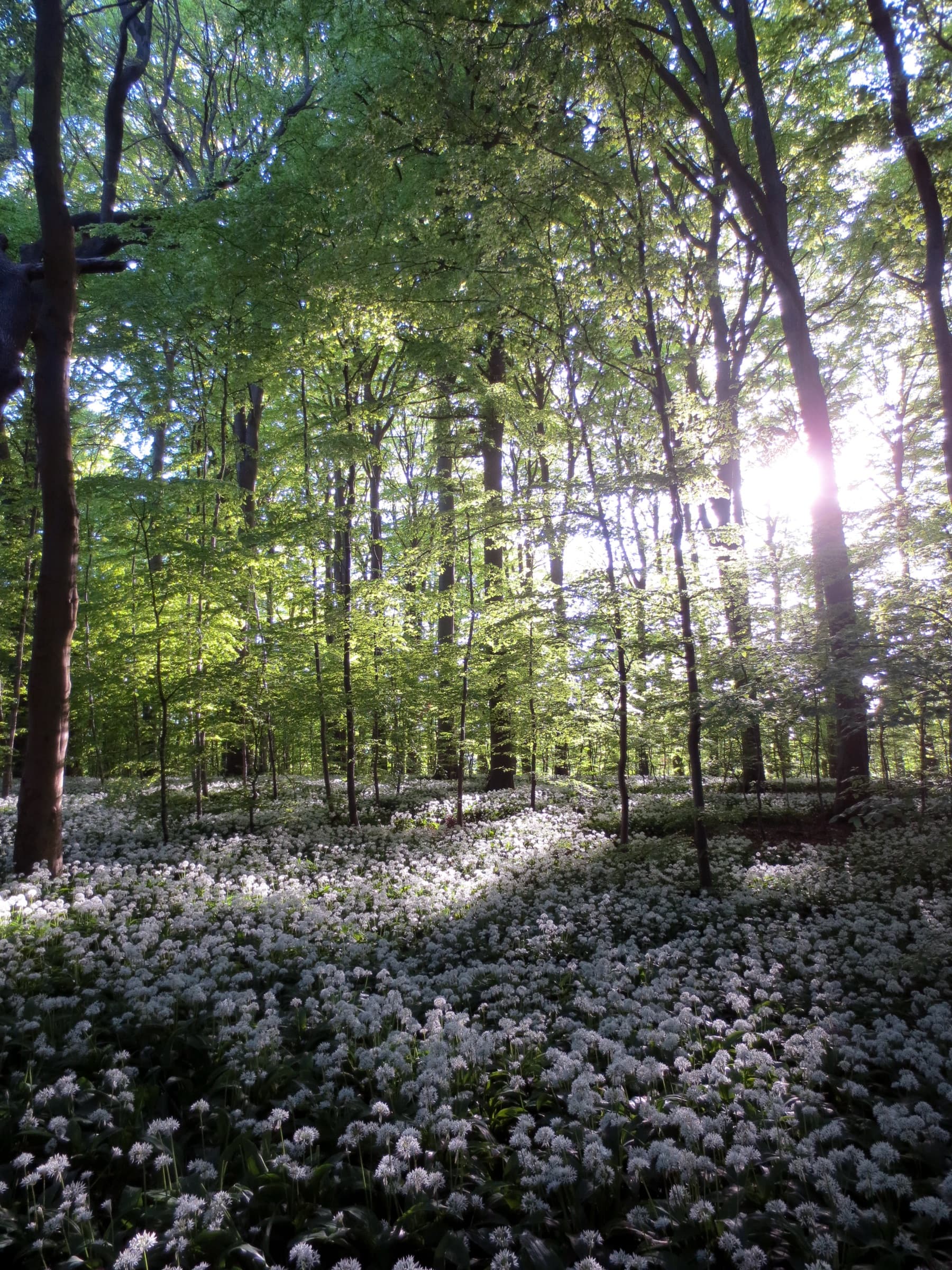
Riis Skov is an actual beech forest inside the city, bikeable from downtown in under fifteen minutes, big enough to lose yourself in, and it runs straight down to a swimming beach. In May, the forest floor goes white with wood anemones. In October, copper with leaves. It is genuinely beautiful, and most tourists never find it.
Marselisborg Palace & Park is the Danish royal family's summer residence. When the queen isn't in town, the grounds are open, with rose gardens, bronze sculptures from Denmark's best twentieth-century artists, and sightlines straight out over the bay. South of the palace, the park turns into forest, and the forest turns into cliffs.
Night Moves
Aarhus is a university town, which means the nightlife is cheaper, later, and more varied than you would expect from a city this size.
Cirkuskroen is the one to tell your friends about. A dive bar legend, with 1,300 clown figurines staring at you from every ceiling and wall, cold beer in glass bottles, and a clientele that ranges from retirees to postgraduates to the occasional visiting professor. If you want a polished cocktail, go somewhere else. If you want cold beer and the real Aarhus, this is the place.
Mikkeller Bar Aarhus is the Danish craft beer empire's local outpost, with twenty rotating taps, expensive by Aarhus standards, and worth it for anyone who cares about what's in the glass.
When It Rains (and It Will)
Denmark's weather has opinions. Pack a waterproof layer and accept that a gray afternoon is not the end of your plans.
ARoS, Moesgaard, and Den Gamle By all work beautifully in bad weather. You could fill an entire rainy day on just those three without ever feeling trapped. Dokk1 is the unofficial wet-weather backup. Climb to the upper floors, grab one of the windowside lounge chairs, and watch the harbor turn silver. It costs nothing. Nobody will ask you to leave.
The Latin Quarter is arguably better in the rain. The cobblestones go dark, the shops light up their windows earlier, and the cafés run their espresso machines twice as hard. Duck into any café with a steamed-up window and order whatever the person next to you is having.
And if the forecast holds for a week, this is when the sauna regulars at the Harbor Bath look the most smug. Rent a cheap towel, pay the entry fee, and do it their way.
Walk the Streets
Some of the best things to do in Aarhus are not things, exactly. They are places to walk.
The Latin Quarter is the old medieval core, all pastel houses, independent shops, antique bookstores, and cafés where a single cappuccino can quietly stretch to forty minutes. The cobblestones are original. The street names are carved into the buildings. Get lost on purpose.
Climb the hill to Aarhus Cathedral, the tallest and longest church in Denmark, when you want a sense of scale. Entry is free. The frescoes are medieval, half-faded in the way only medieval paint can be, and the tower is climbable if you're willing to queue.
How Long, When, and How
Two days covers the essentials, the big three museums (if you pair ARoS and Den Gamle By on one day and do Moesgaard on the next), one long harbor walk, one proper dinner, one late night in the Latin Quarter. Most visitors wish they had one more day.
Three days is the sweet spot. You get all of the above, plus a forest walk, a market morning, and enough time to sit in one café without feeling guilty about it.
Four days or more and you start discovering the city the way locals do, the bakery on the corner, the bar with the good jukebox, the bench at the harbor that catches afternoon light.
Getting around is trivial. The inner city is walkable end to end in twenty-five minutes. The bus system works. The Donkey Republic city bikes are cheap and everywhere. You will not need a car unless you are heading deeper into Jutland.
Getting here is just as simple. The direct train from Copenhagen crosses the Great Belt Bridge and pulls into Aarhus H in under three hours; the bus-and-ferry route costs around 99 DKK if you book ahead.
The best months are late May through early September, and early September is the quiet peak, the students are back, the Aarhus Festuge festival takes over the center, the weather still holds, and the summer tourist numbers have already dropped. Winter is cold but honestly hygge: cheap hotels, Christmas markets on the main square, and museums at their quietest.
The Short Version
If someone asks you what to do in Aarhus, the honest answer is to walk it. The city is small enough to reward curiosity and dense enough to keep rewarding it for days. Three museums, one harbor, one forest, one bakery, one dive bar. That is the minimum. Everything else is bonus.
Do not try to do it all. Pick the three things that sound most like you, build the day around them, and leave room for whatever you stumble onto between stops, a side street with a bookshop, a bakery with a queue out the door, a park bench with a better view than the guidebook promised. That is where Aarhus actually lives.
Ready to plan? Open our interactive map to see every attraction in this guide laid out across the city. Filter by category, drop a pin on your hotel, and build your own day. For more reading, we've written the shorter companion pieces: a 3-day Aarhus itinerary, an Aarhus on a budget guide, a neighborhood-by-neighborhood where to stay in Aarhus breakdown, and an honest take on whether Aarhus is worth visiting at all.
Explore on the Map
See all 20 places on the map